

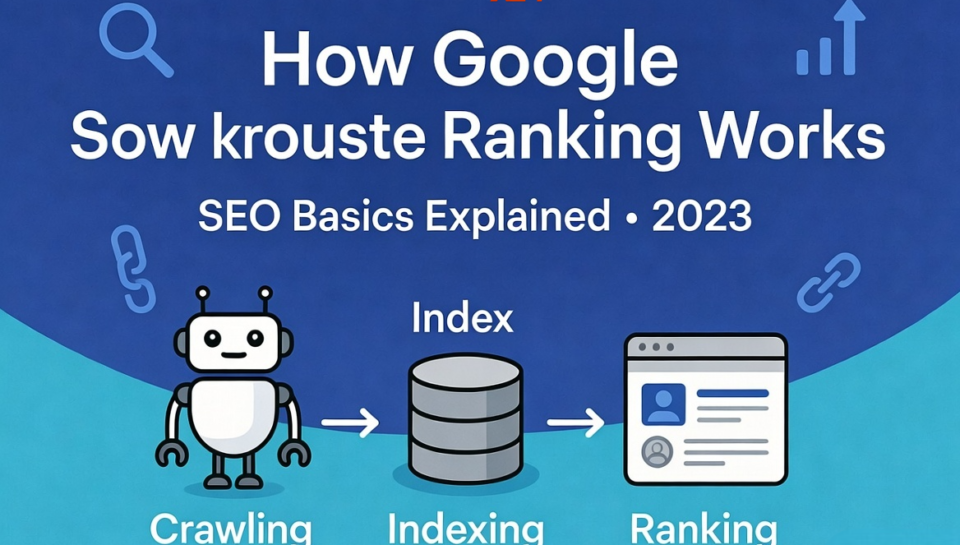
SEO Basics: How Google Ranking Works in 2026
Introduction
In the world of digital marketing, understanding SEO Basics: how Google ranking works is the foundation of effective SEO. Every day, Google processes billions of searches and delivers the most relevant results in a fraction of a second. But what exactly determines whether your webpage appears on page 1 or gets buried on page 10?
Google’s algorithm is complex, involving hundreds of ranking signals and multiple systems working together. In 2026, factors like E-E-A-T (Experience, Expertise, Authoritativeness, and Trustworthiness), user satisfaction, and AI-driven intent matching have become even more critical following recent core updates.
This beginner-friendly guide breaks down the SEO basics of how Google ranks pages — from crawling to final ranking — and shares practical tips to improve your visibility.
The Three Main Stages of Google Search
Google Search operates in three primary stages:
- Crawling Google uses automated bots (called crawlers or spiders) to discover new and updated pages across the web. These bots follow links from one page to another. Tip: Ensure your site has a clean internal linking structure and submit a sitemap via Google Search Console to help crawlers find your content faster.
- Indexing Once a page is crawled, Google analyzes and stores its content (text, images, videos) in a massive database called the Google Index. Not every page gets indexed — poor quality, duplicate content, or technical issues can prevent indexing. Pro Tip: Use the “site:yourdomain.com” operator in Google to check which pages are indexed.
- Ranking (Serving Results) When a user enters a query, Google’s algorithms evaluate indexed pages and rank them based on hundreds of signals. The goal? Deliver the most relevant, helpful, and trustworthy results.
How Google Determines Rankings: Key Signals Explained
Google doesn’t rely on a single factor. Instead, it combines multiple signals to assess relevance, quality, usability, and authority. Here’s how it works in practice:
1. Understanding Search Intent (Meaning of the Query)
Before ranking anything, Google interprets what the user really wants — informational, navigational, transactional, or commercial investigation intent. Modern algorithms use advanced AI to understand context, synonyms, and nuanced queries beyond exact keywords.
SEO Tip: Always create content that fully satisfies the dominant search intent for your target keyword. Analyze top-ranking pages to see the format, depth, and angle users expect.
2. Content Relevance and Quality
Google evaluates whether your page contains information that matches the query. This goes far beyond keyword density:
- Topical depth and comprehensiveness
- Passage-level relevance (Google can rank specific sections of a page)
- Originality and value
In 2026, helpful content that demonstrates real E-E-A-T stands out. Google rewards content created by people or organizations with clear experience and expertise in the topic.
Actionable Advice:
- Write in-depth, well-structured content with clear headings.
- Include author bios with credentials.
- Back claims with data, sources, or first-hand experience.
- Avoid thin, AI-spun, or keyword-stuffed content.
3. Page Experience and Usability
Google considers how pleasant and accessible your page is to users:
- Core Web Vitals: Loading speed (LCP), interactivity (INP), and visual stability (CLS).
- Mobile-friendliness (mobile-first indexing).
- Secure browsing (HTTPS).
- No intrusive interstitials or pop-ups.
Pages with excellent page experience tend to perform better when other signals are similar.
4. Authority and Backlinks
Backlinks (links from other websites) remain a powerful signal of trust and authority. However, quality matters far more than quantity. Links from reputable, relevant sites carry more weight.
In 2026, brand mentions and topical authority across the web also influence rankings, even without direct links.
5. User Engagement Signals
While not directly confirmed as ranking factors, metrics like click-through rate (CTR), dwell time, bounce rate, and pogo-sticking (quickly returning to results) help Google gauge real-world satisfaction.
Important Google Ranking Factors in 2026
Here’s a prioritized list of what matters most today:
- E-E-A-T Signals — Especially strong for YMYL (Your Money or Your Life) topics.
- Search Intent Matching — At both page and passage level.
- Content Quality & Helpfulness — Original insights over generic information.
- Technical SEO — Fast, secure, crawlable, and mobile-optimized sites.
- Core Web Vitals & Page Experience.
- Backlinks & Brand Authority.
- Freshness — For time-sensitive queries.
Recent core updates (including the March 2026 update) have emphasized rewarding authoritative brands and data-rich content while demoting low-value or spammy pages.
Common Myths About Google Ranking
- Myth: More keywords = better ranking. Reality: Natural usage and semantic relevance win.
- Myth: Backlinks are dead. Reality: High-quality backlinks still matter for authority.
- Myth: AI content ranks easily. Reality: Google increasingly detects and penalizes low-effort AI-generated content without human oversight and value.
How to Improve Your Google Rankings: Practical SEO Checklist
- Conduct thorough keyword research focused on intent.
- Create comprehensive, user-first content with strong E-E-A-T.
- Optimize on-page elements (titles, meta descriptions, headings, images with alt text).
- Improve site speed and mobile experience.
- Build a healthy backlink profile through genuine outreach and content marketing.
- Monitor performance with Google Search Console and Analytics.
- Stay updated with Google’s core updates and adjust accordingly.
Conclusion
Understanding how Google ranking works demystifies SEO and helps you create better websites and content. At its core, Google wants to reward pages that are relevant, high-quality, trustworthy, and deliver a great user experience.
Focus on providing genuine value to your audience rather than chasing algorithm tricks. In 2026 and beyond, sites that consistently demonstrate expertise and help users will continue to thrive in search results.